1 · The problem

Cutting a sheet changes what it can do

Kirigami turns a flat sheet into something that stretches, twists, pops up or snaps, just by cutting it. But designs are shared as figures, one-off parameters or cut files with hundreds of coordinates, so they are hard to compare, reuse or collect into data sets.
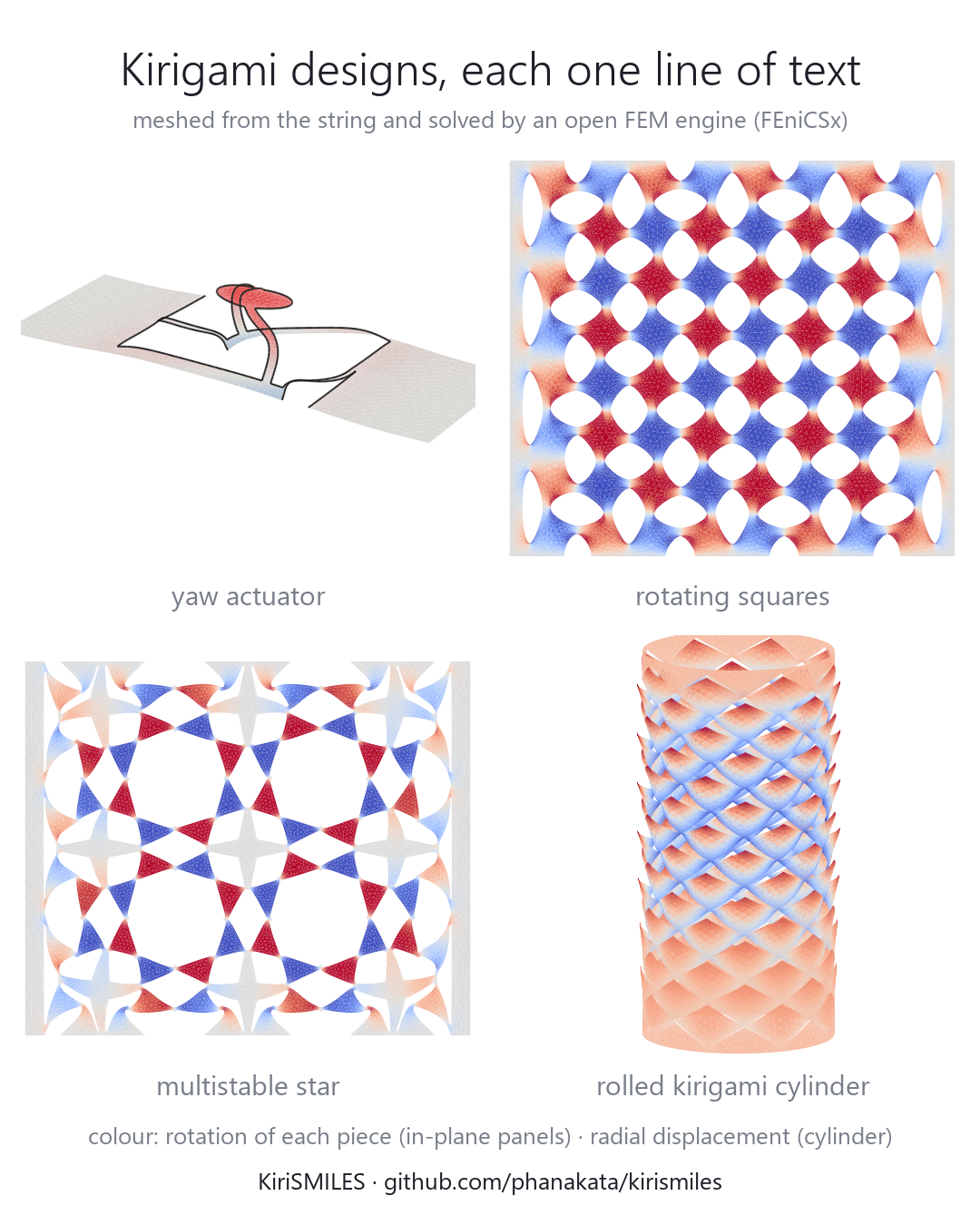
Four simulated kirigami designs: a yaw actuator, rotating squares, a multistable star pattern and a rolled kirigami cylinder
Four published designs, each written as a string and simulated from it.

2 · The idea

A line notation, like SMILES for molecules

A crystal is a lattice plus a basis. A KiriSMILES string is a lattice plus a motif of cuts, or pieces combined by mirrors, inversions and repeats. Every string maps to one finite pattern, is checked before anything is cut, and gets a canonical identity, so the same design written two ways is recognised as one.

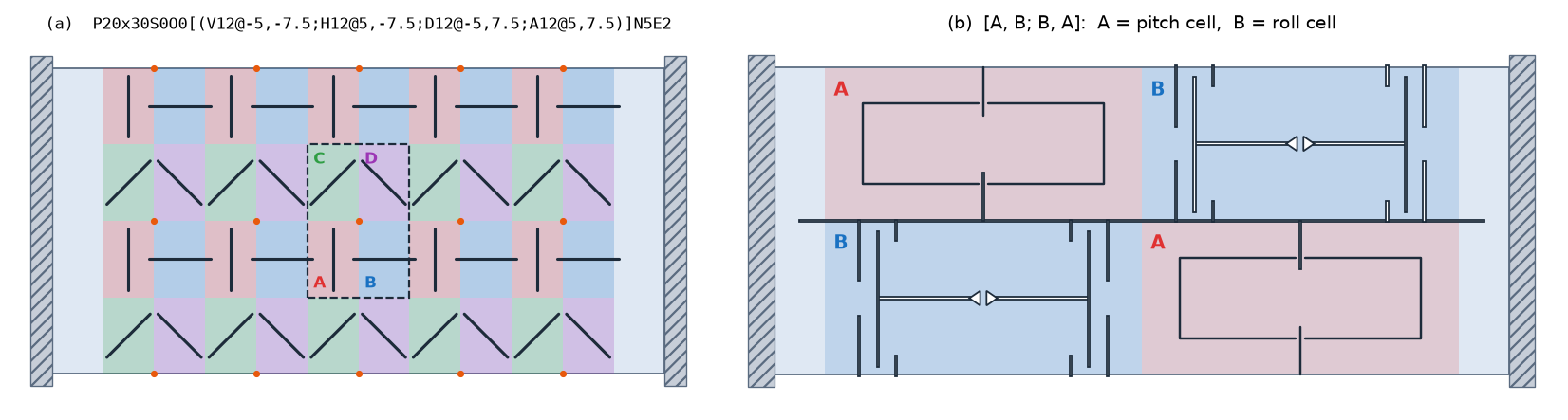
Motifs can be grouped into supercells: below, four slits A–D as one cell, and a pitch cell (A) and a roll cell (B) in a 2 × 2 layout.

Supercells: four slits A to D as one group, and pitch and roll cells in a two by two layout, each cell type shaded in its own colour

3 · It moves

From a string to a 3D motion

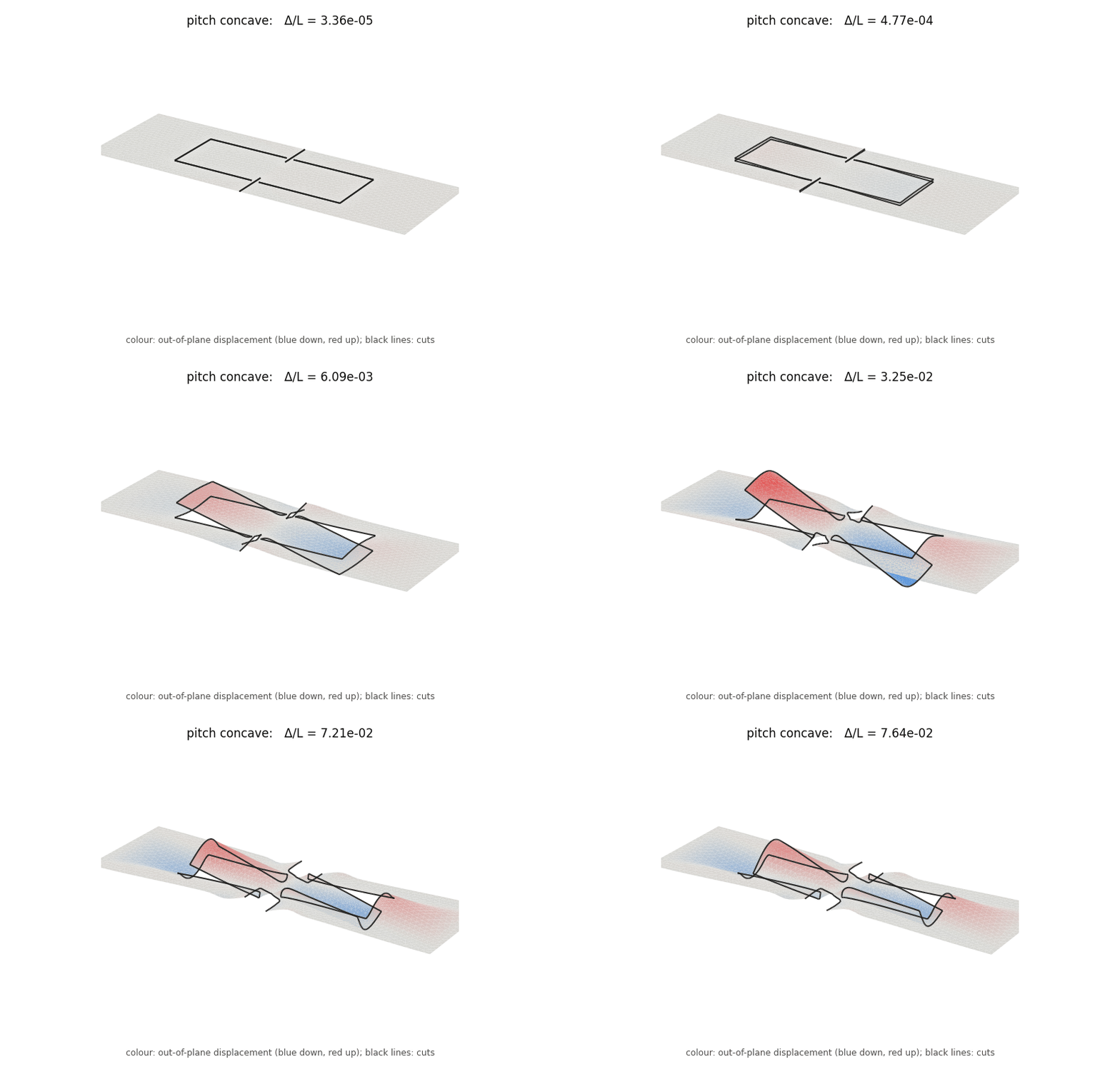
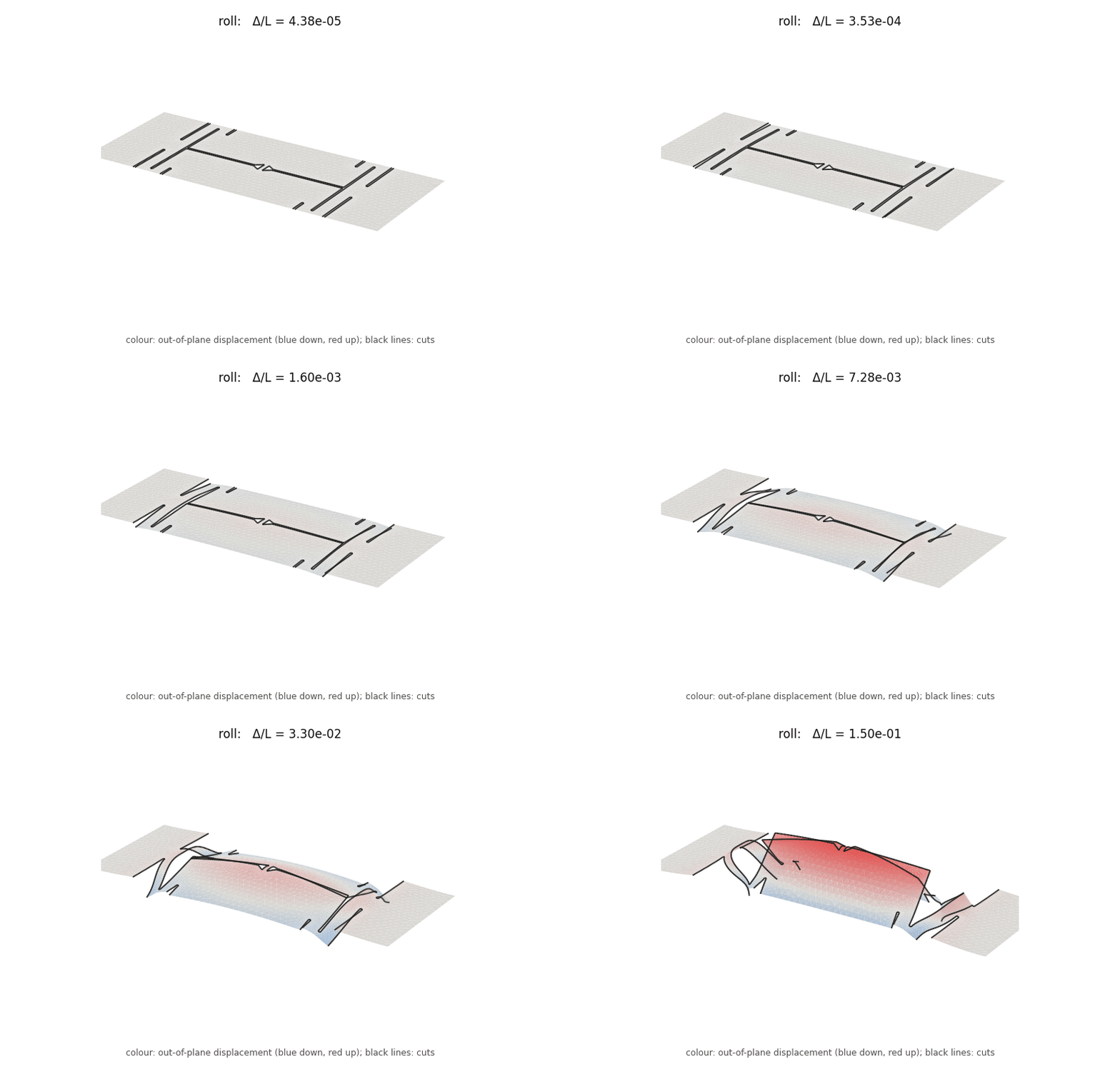
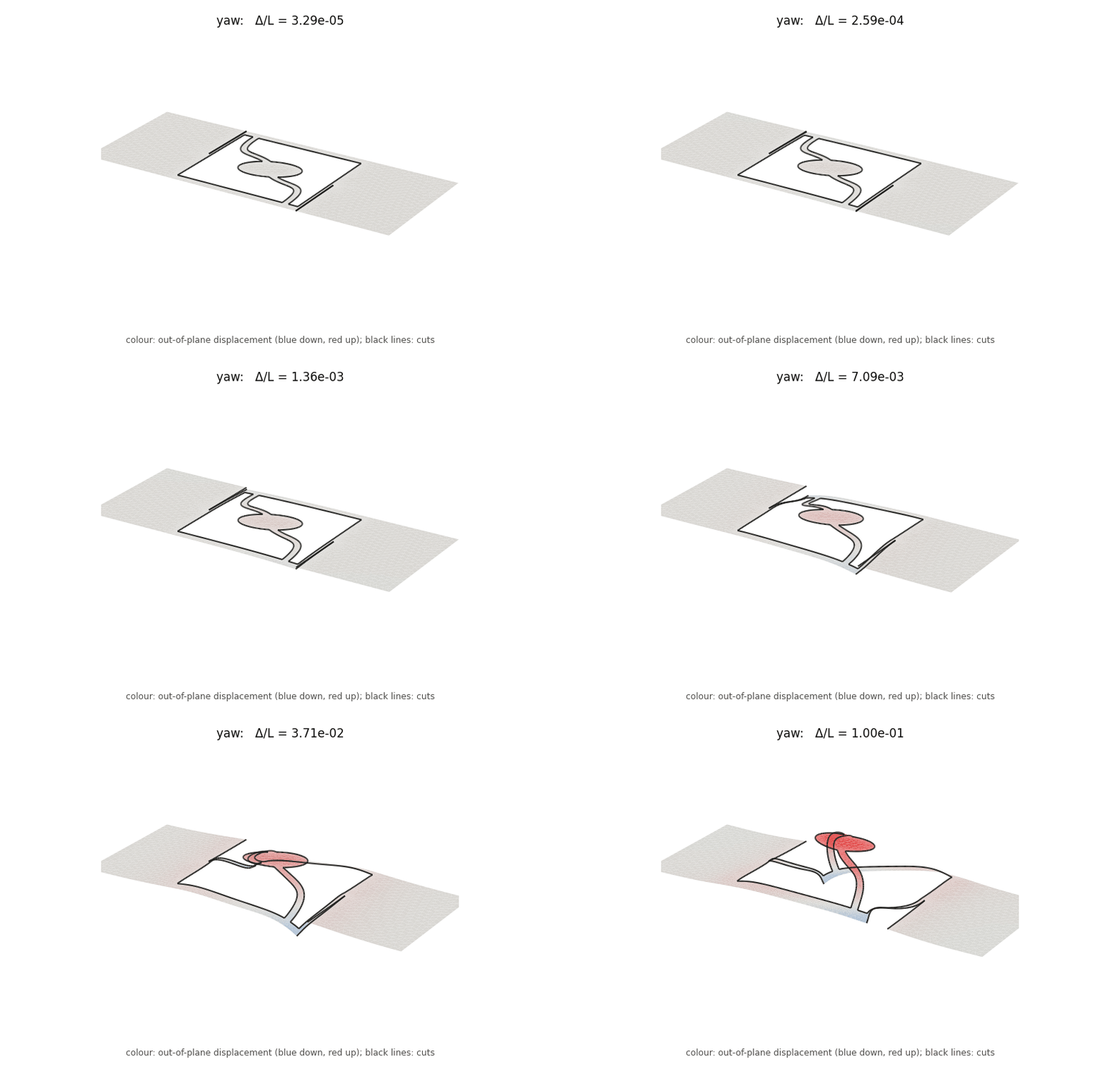
Each string becomes a finite element mesh, solved with FEniCSx (a Föppl–von Kármán plate and a Kirchhoff–Love shell) through buckling and large rotations. Pull the sheet and a cut cell pitches, rolls or yaws.

Pitch actuator stretched
pitch
Roll actuator stretched
roll
Yaw actuator stretched
yaw

4 · Combine cells

A motion sequence, written in the string

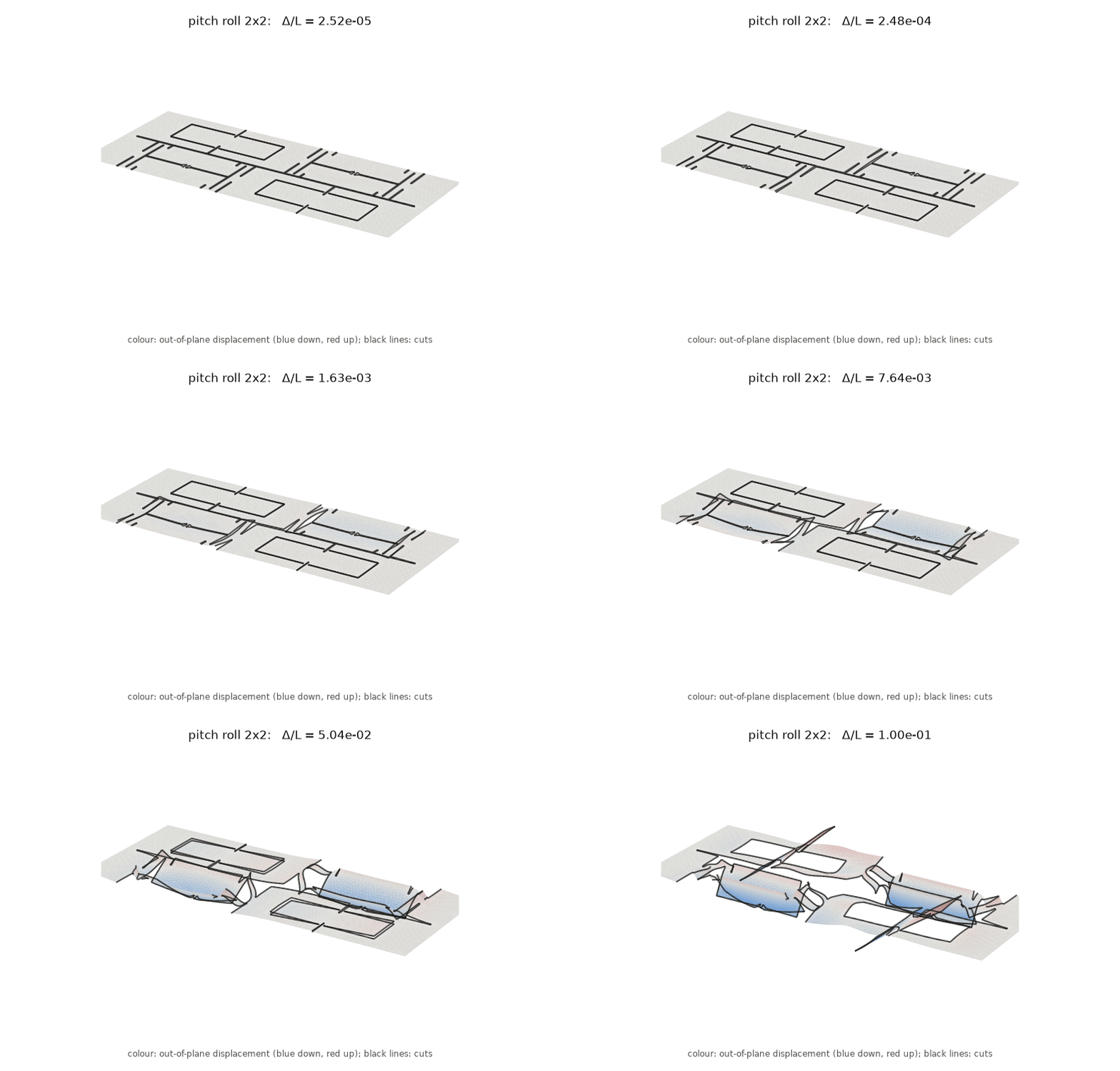
Cells joined in series carry the same force, so the softest moves first. In the [A, B; B, A] sheet the roll cells (B) turn first; the pitch cells (A) wait until about 7% stretch, then tilt to 36° while B reaches 67°. The order is set by the cuts, which opens a route to programmed sequences.

Pitch and roll cells in a two by two layout, stretched: roll cells turn first, pitch cells later

5 · Published designs, replicated

20 designs from the literature, one open engine

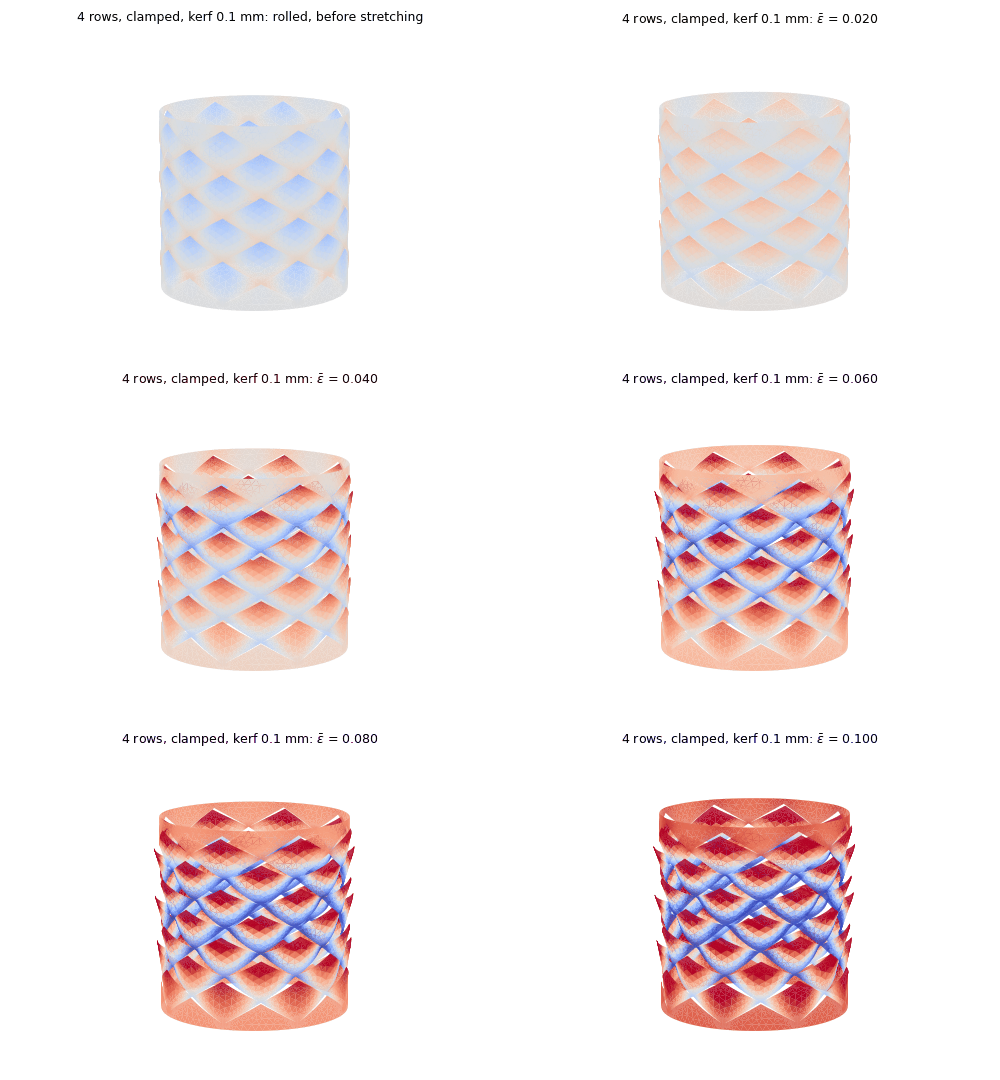
Rolled kirigami shell stretched, cuts popping out
rolled kirigami shell
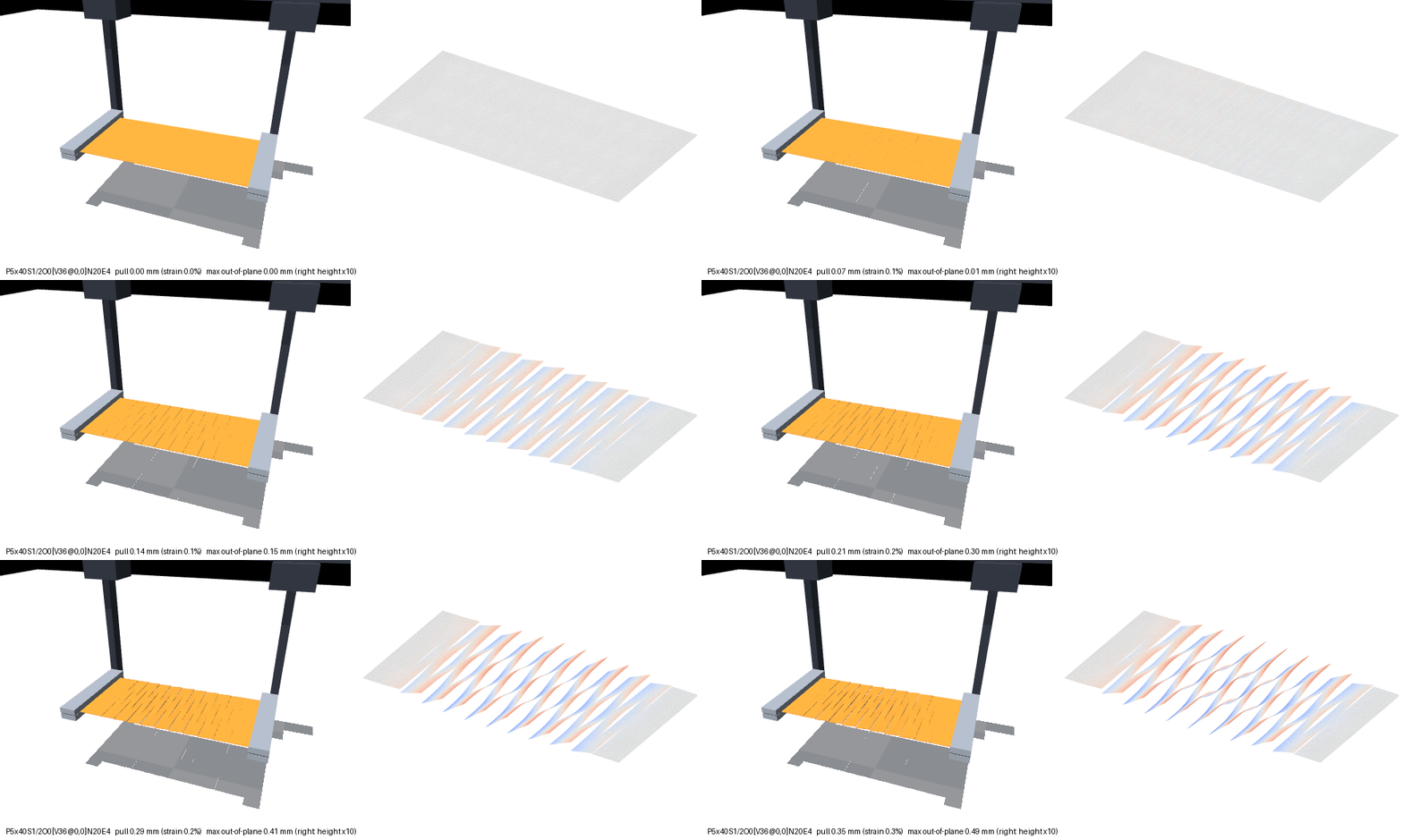
Kirigami sheet pulled by a robot gripper in MuJoCo, next to the engine result
exported to MuJoCo, pulled by a robot gripper

6 · For people and AI agents

One platform, the same operations

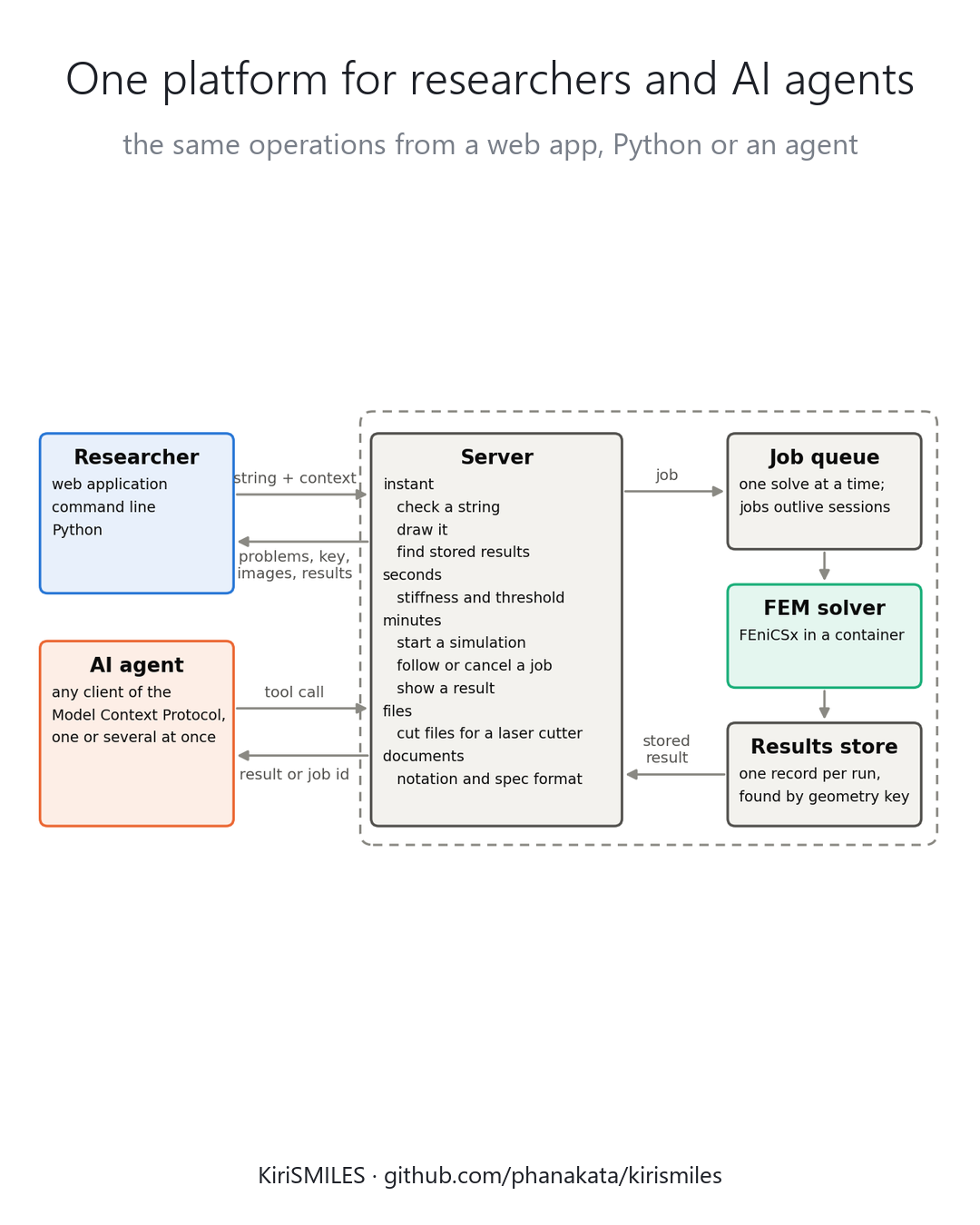
Notation, solver, job queue and a results database indexed by design identity. Researchers use a web app, the command line or Python; AI agents such as Claude use the same tools through an MCP server: write a design, check it, preview it, simulate it, export laser-cut files. Designs also export to MuJoCo for robot simulation.

Platform diagram: researcher and AI agent talk to one server, which queues jobs for the FEniCSx solver and stores results

Why I built it

During my PhD and postdoc I wanted to solve the inverse design problem of kirigami: from a target behaviour back to the cuts. Writing the code was the bottleneck. Building KiriSMILES with an AI coding assistant changed that, and I hope it becomes a common language for kirigami and a testing ground for AI agents that design materials.